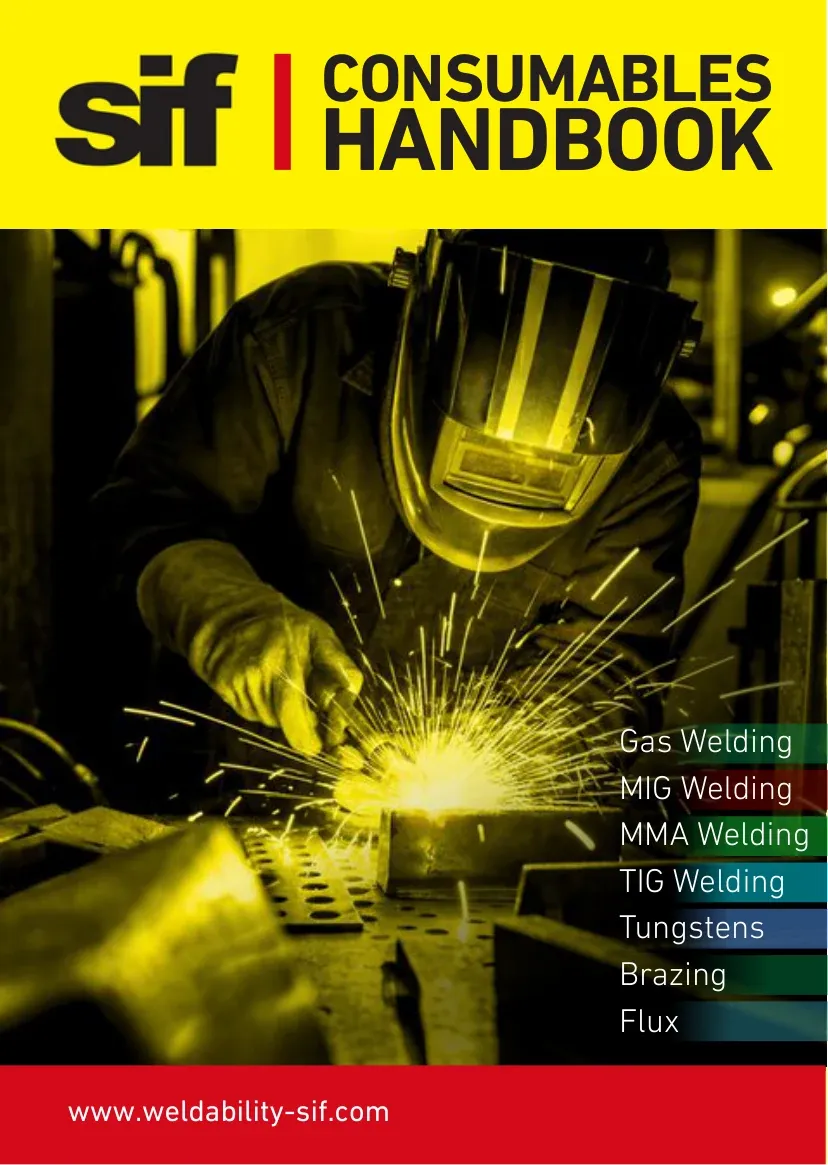
2026 edition free download
Every SIF welding and brazing consumable, spec'd on one page: composition, mechanical properties, positions, standards and the part number for each diameter and pack size. Plus 17 pages of selection charts that take you from parent metal to filler, current and shielding gas.
01 — Why it's worth the download
Look the parent metal up by grade and standard (BS EN 1561, BS 2789, the 300-series stainless grades) and read straight across to the filler, the amps and the gas for oxy-acetylene, TIG, MIG and stick.
Every datasheet carries the ordering codes for each diameter against each pack size, so the spec sheet and the order are the same piece of paper.
Typical weld-metal composition, mechanical properties and the EN standard each consumable is made to. They're the numbers you need when a procedure or an inspector asks.
02 — Inside the book
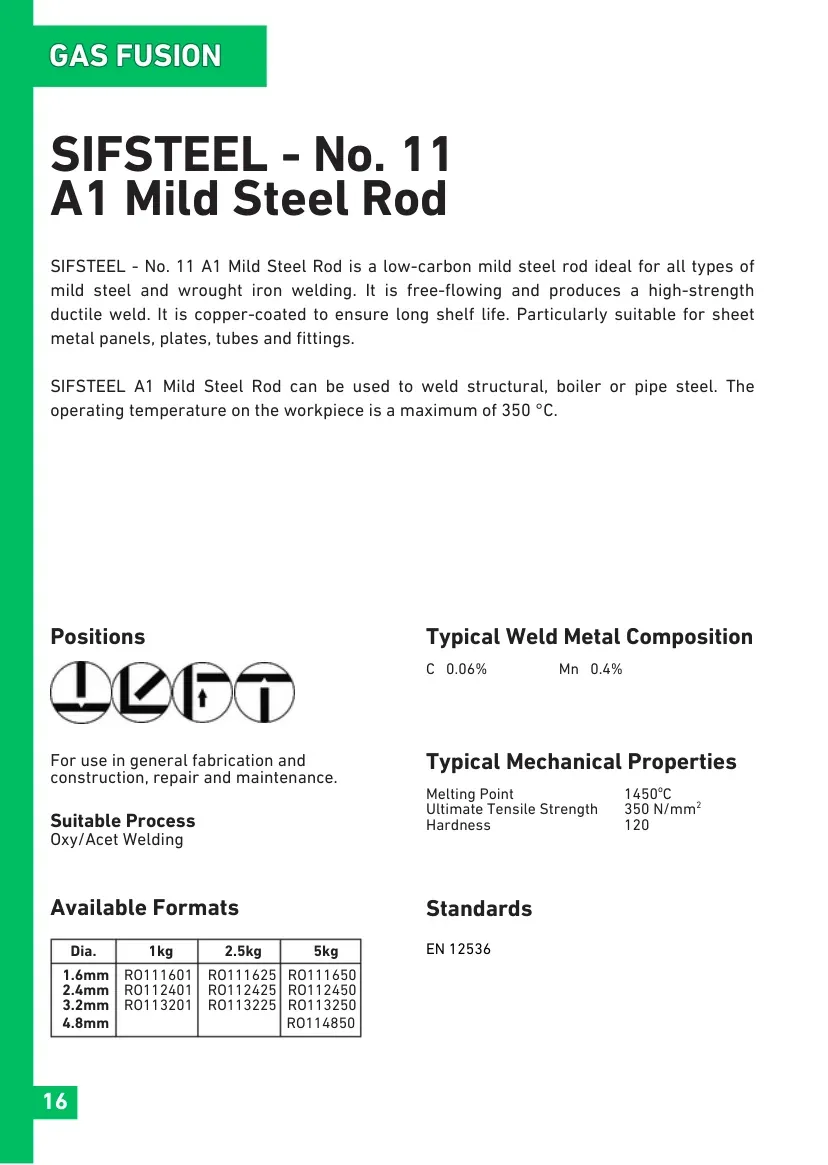
A page per consumable
Description, recommended positions, suitable process, typical weld-metal composition, melting point, UTS and hardness, the EN standard, and a formats table giving the part number for every diameter in every pack weight.
Shown: SIFSTEEL No. 11 / A1 mild steel rod, EN 12536.
The bit people get wrong
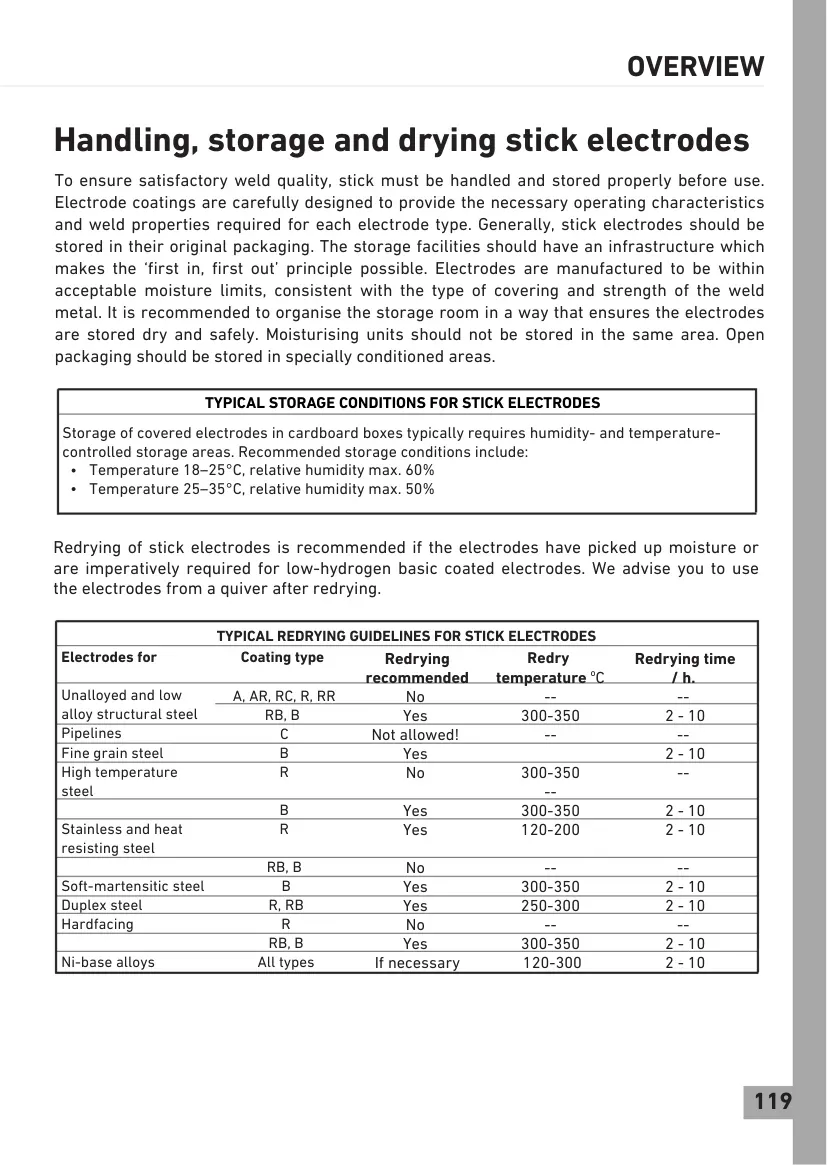
Stick electrodes pick up moisture and it shows in the weld. The reference section gives the storage temperature and humidity limits, and a table of redrying temperatures and hold times by coating type, including which electrodes must never be redried.
Shown: typical redrying guidelines, pages 118–119.
The back of the book
17 pages of SIFBRONZE alloy-selection charts covering structural mild steel, carbon steels, cast irons, tool and die steels, tube steels, coppers and the full stainless range. Every one maps the grade to a filler, a current range and a shielding gas for each of the five processes.
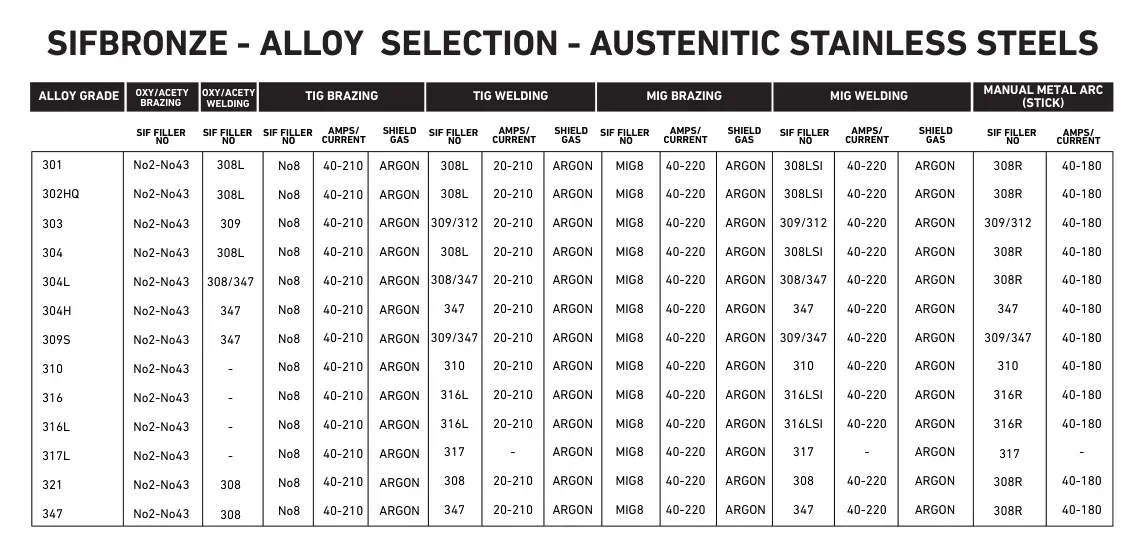 Austenitic stainless, one of 17 charts
 03 — Contents
How steel, stainless, aluminium, brass and bronze, magnesium and copper actually behave when you weld them, and what that means for filler choice.
SIFSTEEL, SUPERSILICON and SIFSILCOPPER for oxy-acetylene work, with operating temperatures and suitable joints.
SIFTRODE 6013, 7016 and 7018: classification, positions, current ranges and the packs each diameter comes in.
The full SIFMIG and SIFCORED range: solid and flux-cored, mild and low-alloy, stainless, duplex, aluminium and bronze, plus supply spool sizes.
SIFTIG and SIFALUMIN across carbon and low-alloy steel, the full austenitic and duplex stainless set, aluminium, copper-nickel, magnesium and titanium.
Electrode types and the colour code, so you can match tungsten to process and current without guessing.
SIFBRONZE, SIFREDICOTE, SIFCUPRON and the silver solders from 38% to 55% Ag. SIF has been making the range since 1925.
Which flux goes with which process and filler, in powder, paste and liquid form.
Temperature chart, welding position symbols, a welding-defect guide, and the handling, storage and redrying conditions for stick electrodes.
The back of the book: find the parent metal by grade and standard, read across to the filler, current and shielding gas for every process.
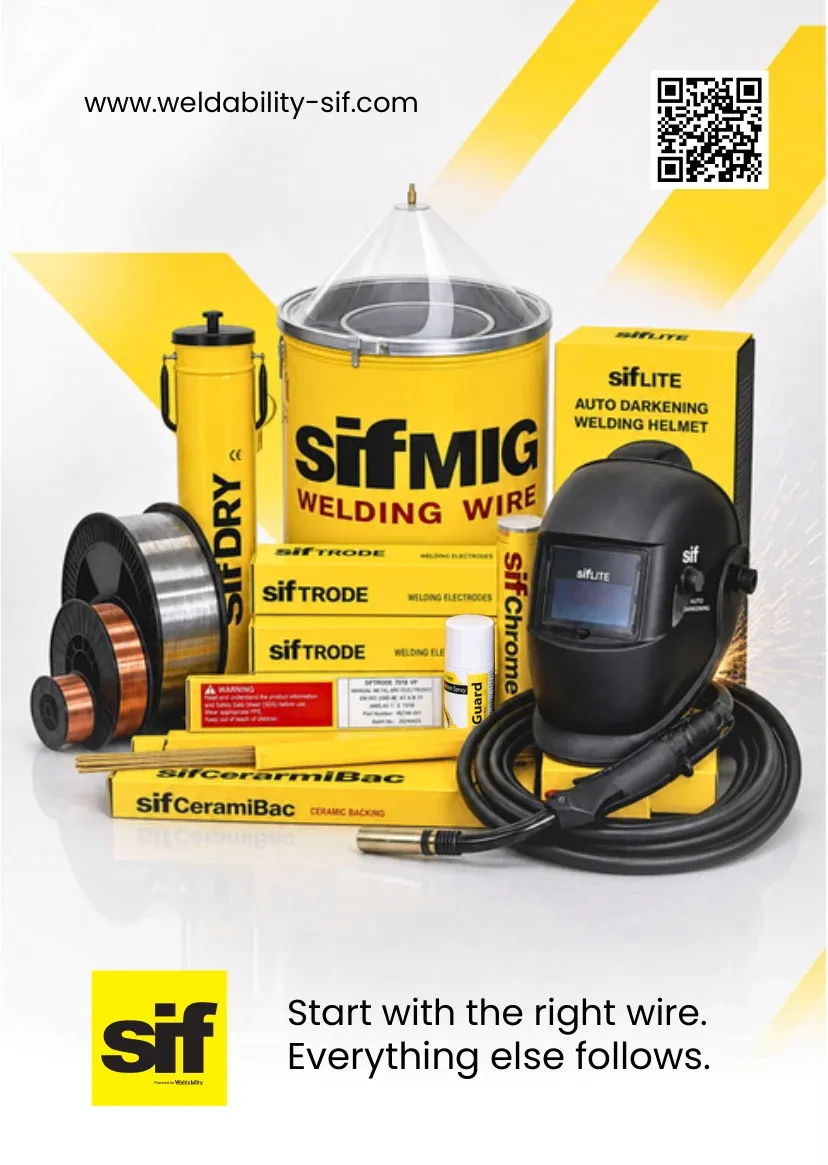
04 — Get the handbook
Free, and no sign-up to get it. Keep it on the phone for when you're stood at the machine.
Not sure which consumable your job needs? Ask the experts or talk to the trade desk. The handbook is a reference, not a substitute for a second opinion.
Open an account
Trade-only No minimum order Free UK delivery over £150. Request an account and get access to the full range.