
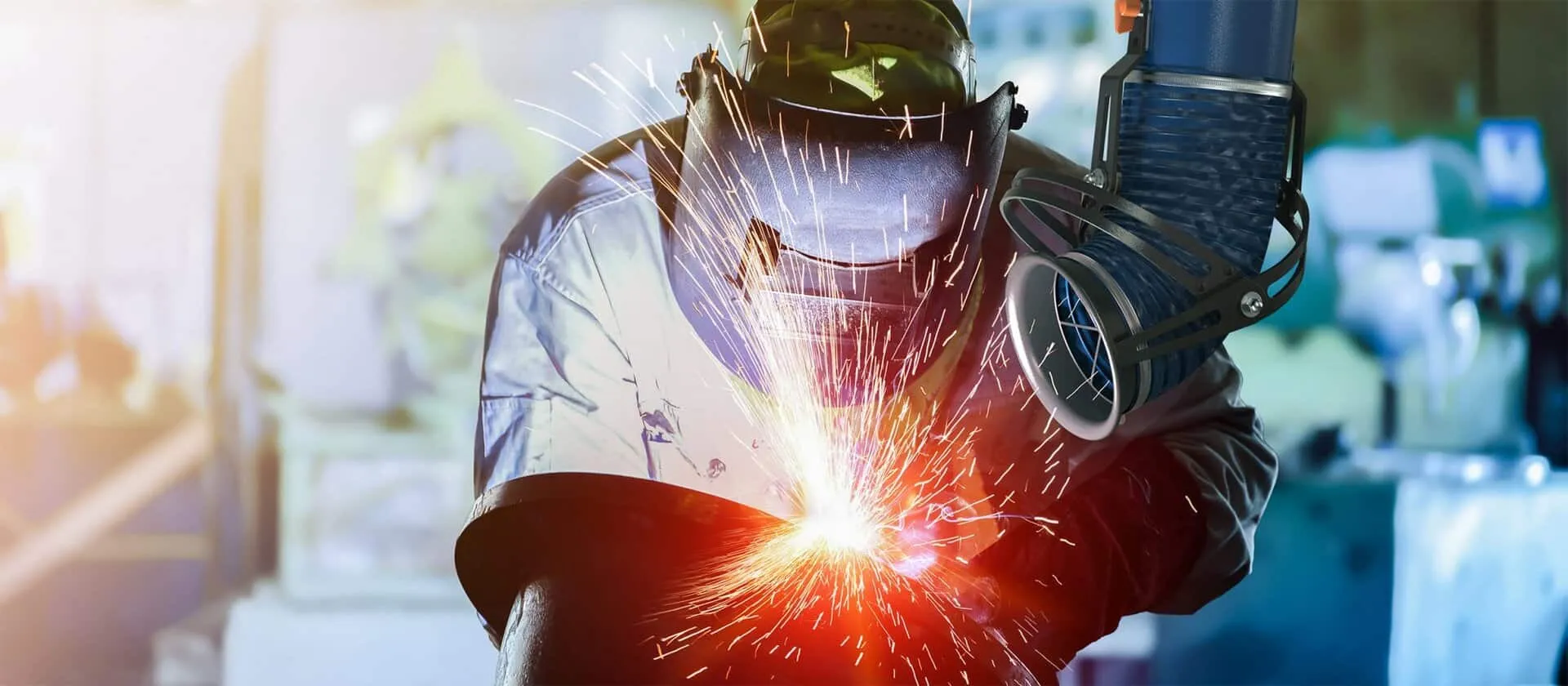
Welding fume is hazardous to health, and the law requires you to control it. The most effective way is to capture fume at source (as close to the arc as possible) with local exhaust ventilation (LEV) before it reaches the welder’s breathing zone. This is now a legal expectation for all welding, including mild steel, following the Health and Safety Executive’s 2019 enforcement change.
This is Extractability, Weldability SIF’s welding fume extraction resource centre. We supply Fumex fume extraction systems (extraction arms, mobile units and centralised LEV) and provide practical advice on HSE guidance, COSHH compliance and system selection. This hub explains why fume extraction is essential, the types of system available (from on-torch extraction to mobile units and fixed LEV), the right solution for industrial, laboratory and vehicle applications, and how to keep your system legally compliant through LEV testing.
Why welding fume extraction is essential
Welding fume is a mixture of very fine, often invisible airborne metal particles and gases produced as the arc vaporises metal and consumables. Inhaled deep into the lungs, it is linked to serious long-term disease.
- In 2017 the International Agency for Research on Cancer (IARC) reclassified welding fume as a Group 1 carcinogen (carcinogenic to humans).
- In response, in 2019 the HSE issued a safety alert stating that all welding fume, including from mild steel, can cause cancer and must be controlled with effective engineering controls (LEV) regardless of duration.
- Under the Control of Substances Hazardous to Health (COSHH) Regulations, employers have a legal duty to assess and control exposure.
General workshop ventilation alone is no longer considered an adequate primary control. Read the full health and legal picture in why you must extract welding fume.
How fume extraction works: capture at source
The principle behind every effective system is source capture: removing fume right at the arc before it spreads into the room or the welder’s breathing zone. Source capture is far more effective than diluting contaminated air across a whole workshop. The closer the capture point sits to the weld, the less airflow it takes to be effective.
Types of welding fume extraction
There is no single “best” system. The right choice depends on how and where you weld. The main types are:
- On-torch (on-gun) extraction: a MIG torch with a built-in extraction nozzle captures fume at the exact point of generation. Excellent capture, but adds weight to the torch.
- Mobile / portable extraction units: a movable unit with a capture arm, ideal where welding locations change frequently or for smaller workshops.
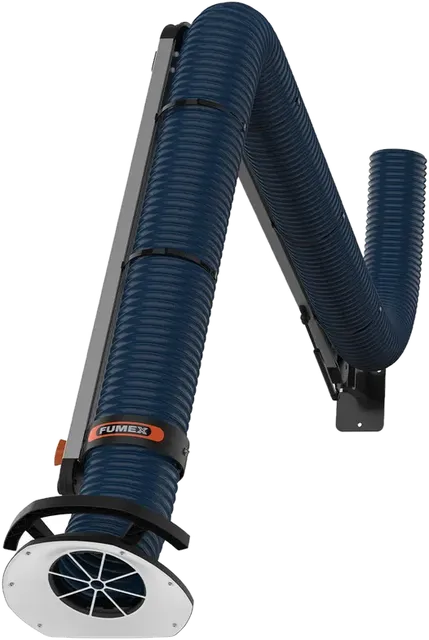
- Fixed LEV with extraction arms: wall- or bench-mounted articulated arms positioned over dedicated welding bays; the standard for established workstations.
- Downdraught benches and extraction booths: draw fume away from the welder across or beneath the work, suited to repetitive bench work.
- Centralised systems and extraction fans: ducted plant serving multiple bays in larger fabrication facilities.
Compare them in detail in our types of welding fume extraction guide, or go deeper on the two most common solutions: welding fume extraction arms and mobile fume extraction units.
Choosing the right system for your application
The best solution depends on your welding process, environment and production volume. Our application guides cover the main settings:
- Industrial fume extraction: extraction arms, mobile units and centralised LEV for fabrication shops and production lines.
- Laboratory fume extraction: compact, controlled extraction for labs, test and education environments.
- Vehicle exhaust extraction: capturing engine exhaust fumes in garages, MOT bays and emergency-vehicle stations.
For a structured walk through process, environment and volume, see how to choose a fume extraction system.
Fume extraction by welding process
Every arc process generates hazardous fume and needs extraction, but the amount and type vary. MMA (stick) welding produces high levels of fume; MIG produces significant metal fume; TIG produces less visible fume but still hazardous contaminants, especially on stainless and specialist alloys. Stainless and coated materials (chromium, nickel, galvanising) produce the most dangerous fume of all. Whatever you weld, extraction is required. See the process hubs under welding machines for process detail.
Keeping your system compliant: LEV testing
Installing extraction is not the end of the duty. LEV systems must be maintained and examined and tested at least every 14 months by a competent person under COSHH, with records kept. Personal exposure monitoring confirms the controls are actually working in practice. Learn what’s required in LEV testing and compliance.