
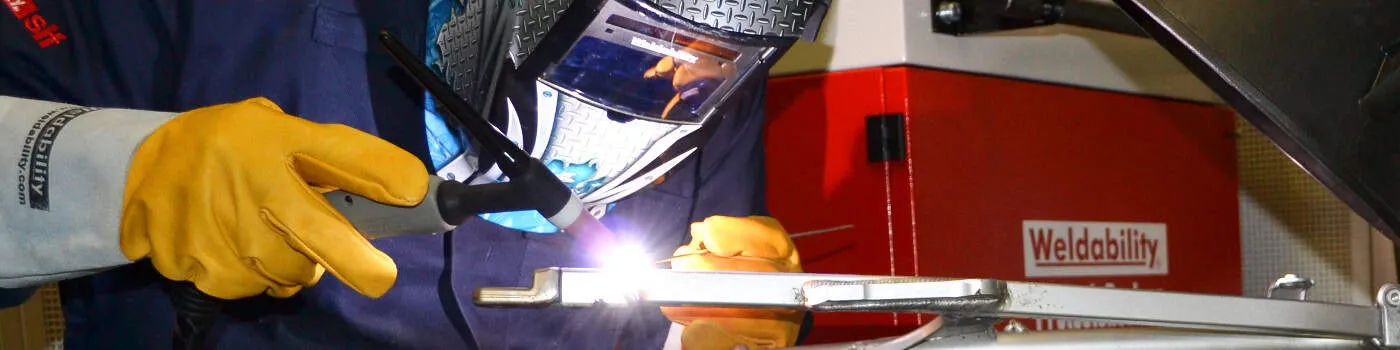
Welding consumables (MIG wire, TIG filler rods, MMA electrodes, flux-cored wire, and submerged arc wire and flux) are the materials used during welding that become part of the finished weld or are consumed while welding. Choosing the correct consumable is essential for achieving the required weld strength, corrosion resistance and mechanical properties. Using high-quality consumables also improves arc stability, reduces defects and increases productivity.
This guide explains what welding consumables are, how to choose the right one for your material and process, and where consumables make the biggest difference to weld quality and cost. Use the links throughout to go deeper on any sub-topic.
What welding consumables are and why they matter
Welding consumables directly affect weld quality, strength, productivity and long-term performance. Selecting the correct consumable helps reduce defects, improve arc stability and ensure the finished weld meets the required mechanical properties. Using quality consumables also reduces rework and improves consistency across production.
Get the choice wrong and the consequences are real: using the wrong welding consumable can result in poor weld strength, cracking, corrosion, lack of fusion or failure to meet welding specifications. That is why every consumable should be matched to the parent material and the intended application.
For a fuller explanation of the main consumable families and how they are selected, see our guide to welding consumable types and selection.
Choosing the correct consumable
The correct welding consumable depends on the parent material, welding process, joint design, mechanical requirements and service environment. Mild steel, stainless steel, aluminium and specialist alloys all require different filler metals. Always match the consumable to the parent material and ensure it complies with the relevant welding procedure or industry standard where applicable.
As a quick orientation, the most widely used consumables include:
- ER70S-6 MIG wire and ER70S-2 TIG rods for mild and structural steel.
- 6013 and 7018 MMA electrodes for general and low-hydrogen steel welding.
- 308L and 316L filler metals for stainless steel.
- 309L for joining stainless steel to mild steel.
- ER4043 and ER5356 for aluminium.
If you’re unsure, consult your welding procedure or seek technical advice to ensure the correct filler metal is selected.
Consumables by welding process
Different processes use different consumable formats. We cover each in detail:
- MIG wire: solid wires such as ER70S-6 for fabrication, plus stainless and aluminium MIG wires, diameters and classifications.
- TIG filler rods: cut-length rods for steel, stainless, aluminium and specialist alloys, plus tungsten electrodes.
- MMA electrodes: stick electrodes including 6013 and 7018 low-hydrogen types, their classifications, rutile vs basic, and storage and drying.
- Flux-cored wire: gas-shielded and self-shielded (gasless) wires for productive and outdoor welding.
- Shielding gas: choosing the right gas for MIG and TIG welding, including gasless options.
Consumables by material
The parent material is the single biggest factor in consumable choice. Our material guides cover the common grades and the filler metals that suit them:
- Consumables for steel: mild and structural steel including S275, S355, Hardox, Domex and weathering steel.
- Consumables for stainless steel: 304, 316, duplex, super duplex and dissimilar-metal joints.
- Consumables for aluminium and non-ferrous metals: aluminium alloys, cast iron, copper, brass, bronze, titanium, nickel alloys, Inconel and Monel.
Quality, standards and storage
Two things separate a good consumable result from an unreliable one: that the consumable is made and classified to a recognised standard, and that it is stored correctly before use.
- Consumable standards and classifications: what BS EN ISO and AWS classifications mean, including BS EN ISO 14341, BS EN ISO 636 and AWS A5.18.
- Storing and handling welding consumables: how to store wire, rods and electrodes to prevent moisture, contamination and hydrogen-related defects.
Buying, value and quality
High-quality welding consumables generally offer more consistent chemical composition, smoother wire feeding, stable arc performance and improved mechanical properties. Premium consumables can reduce spatter, minimise rework and improve overall productivity, particularly in high-volume manufacturing.
When it comes to buying, the cheapest unit price is rarely the lowest total cost. Our buying, value and quality guide explains how to compare brands, choose a supplier, buy in bulk sensibly and weigh total cost of ownership over purchase price alone.
For product-specific buying advice, see our guides to buying MIG wire, TIG consumables, MMA electrodes, shielding gas and torches, tips and wear parts. We also cover how to stock and standardise consumables across a workshop.
Related welding guides
Consumables are one of the three product pillars of our knowledge centre, alongside welding machines and fume extraction. The machine and the gas you run the consumable through matter just as much as the filler itself. For process technique and theory, explore our related guides:
- MIG Welding, TIG Welding, MMA Welding and Flux-Cored Welding
- Welding Machines: choosing and buying MIG, TIG, MMA and laser welders
- Welding Standards & Compliance and Defects & Troubleshooting
- Buying & Supplier Advice
Talk to Weldability SIF
Choosing the right consumable is one of the most important decisions in any welding job. Weldability SIF supplies welding consumables across the UK and our technical team can help you match the correct filler metal to your material, process and application. Contact us for advice or to discuss your requirements.