
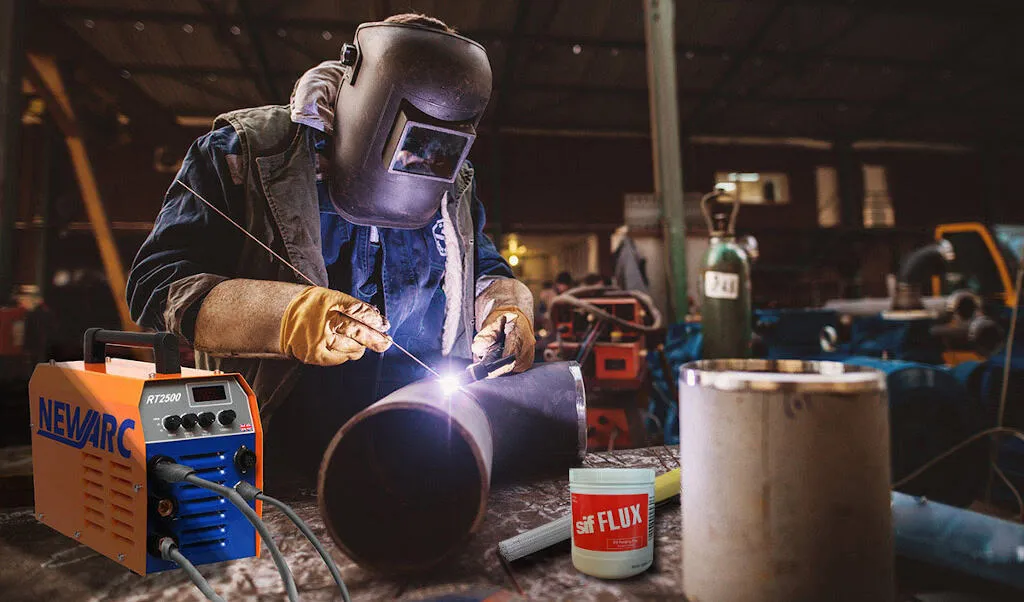
A welding machine (the power source) is the single biggest equipment decision a workshop makes. The right choice comes down to three things: the welding process you need (MIG, TIG, MMA, multi-process or laser), the materials and thicknesses you weld, and the power supply available to you. Get those right and everything else (duty cycle, portability, controls) falls into place.
This hub explains how modern welding machines work, the differences between MIG, TIG, MMA, multi-process and handheld laser welders, and the specifications that actually matter when you buy. Use it as your starting point, then follow the links to in-depth guides for each machine type.
How a modern welding machine works
Almost every welding machine sold today is an inverter. An inverter takes your mains supply and switches it at high frequency through electronic components, producing a precisely controlled welding output from a unit a fraction of the size and weight of the old transformer machines. That electronic control is why a modern inverter can deliver features such as a smooth, stable arc, adjustable arc characteristics, and the ability to run more than one process from a single box.
The key output a machine delivers is current (amperage), sometimes alongside voltage. Higher amperage means more heat and the ability to weld thicker material; thinner material needs lower, more controllable output. Matching the machine’s output range to the thickness you weld is the foundation of every buying decision.
Duty cycle: the spec that matters most
Duty cycle is the percentage of a 10-minute period a machine can weld at a given output before it must cool down. A 200A machine rated at 40% duty cycle can weld continuously at 200A for 4 minutes, then needs 6 minutes to cool. For production welding you want a high duty cycle at your working amperage; for intermittent repair work a lower duty cycle is fine. Always check the duty cycle at the amperage you’ll actually use, not just the headline maximum.
The main welding machine types
MIG welders (GMAW)
MIG machines feed a continuous wire electrode and shielding gas, making them fast, productive and easy to learn. They are the workhorse of general fabrication, automotive and manufacturing. Many also run gasless flux-cored wire for outdoor work. See our guide to MIG welders.
TIG welders (GTAW)
TIG machines give the highest level of control and the cleanest, most precise welds, ideal for stainless steel, aluminium and thin sheet. AC/DC TIG machines add the ability to weld aluminium. They demand more skill but reward it with quality. See our guide to TIG welders.
MMA (stick) welders
MMA machines are the simplest, most portable and most rugged option: just a power source and an electrode holder. They handle dirty, rusty and outdoor work that would defeat MIG or TIG, which makes them a site and maintenance favourite. See our guide to MMA welders.
Multi-process welders
A multi-process machine runs MIG, TIG and MMA from one power source, giving flexibility to workshops that do varied work and don’t want three separate machines. See our guide to multi-process welders.
Handheld laser welders
Handheld laser welding is the newest process. It produces fast, low-distortion welds with minimal heat input and little finishing, and is increasingly used in sheet-metal fabrication and stainless work. The same platforms often offer laser cleaning. Explore our full laser welding guide.
Weld cleaning machines
Electrochemical and laser weld-cleaning machines remove the heat tint and oxidation left after welding stainless steel, and are faster and safer than pickling paste. See weld cleaning.
Which welding machine should I choose?
Match the machine to your work:
- General fabrication, fast production, easy to learn → MIG
- High-quality, precise, thin material, stainless and aluminium → TIG (AC/DC for aluminium)
- Site work, maintenance, outdoors, dirty steel, maximum portability → MMA
- Varied work, want one machine for everything → multi-process
- High-volume sheet/stainless fabrication, minimal distortion and finishing → handheld laser
Then check the machine covers your material thickness (output range), offers an adequate duty cycle at your working amperage, and suits your power supply (single-phase 230V vs three-phase 400V for higher-output industrial machines). For the full decision framework, see how to choose a welding machine.
Single-phase or three-phase?
Lighter MIG, TIG and MMA machines run on a standard single-phase 230V supply, which suits most small workshops and mobile work. Higher-output industrial machines and many high-duty-cycle production units need a three-phase 400V supply. Confirm your available supply before you buy: it can rule a machine in or out regardless of its other specs.
The machine is only half the system
A welding machine performs only as well as the consumables and gas you run through it. The right wire, rod or electrode, the correct shielding gas, and good torch consumables (tips, nozzles, liners) all directly affect arc stability and weld quality. Pair your machine guide with our welding consumables hub, and protect your welders with proper fume extraction, since every arc process generates hazardous fume.