
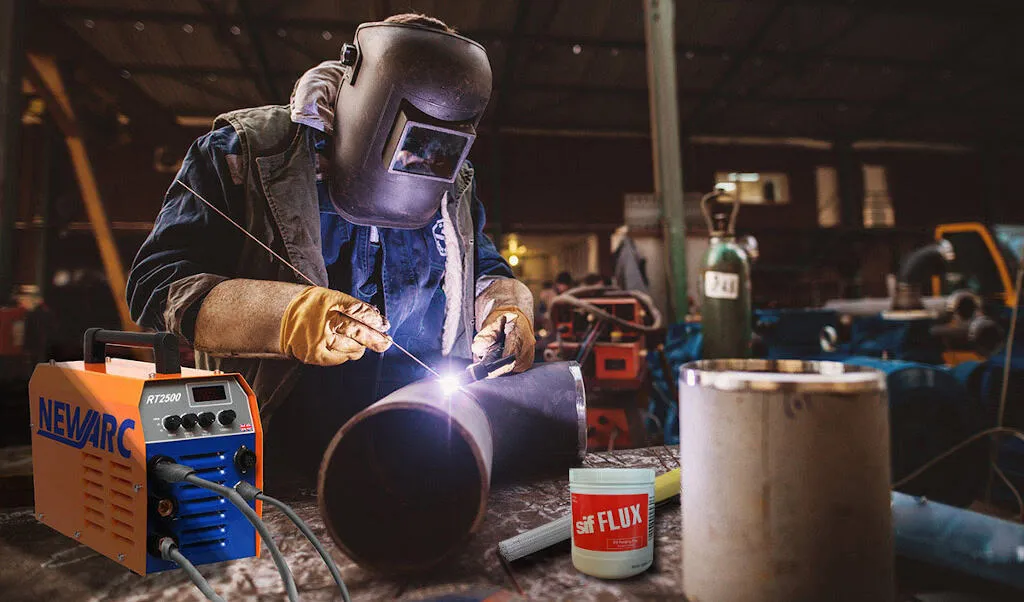
Laser welding joins metals using a highly concentrated laser beam to melt and fuse the material, producing narrow, precise welds with minimal distortion. It is valued for its speed, accuracy and ability to weld thin materials with very little heat input, and is widely used in manufacturing, automotive, aerospace and precision engineering. Modern handheld fibre laser welders have made the technology far more accessible for everyday fabrication and repair work.
This is the Weldability SIF Laser Centre, our hub for handheld laser welding and laser cleaning. Weldability SIF supplies HP Fiber handheld laser welders and ANTWeld fibre laser cleaning systems, backed by operator training, Cepro Unisonic Class 1 laser safety booths and guidance from our in-house Certified Laser Safety Officer (LSO). The pages below cover how the process works, safety, materials and applications, how laser compares to MIG and TIG, consumables and filler wire, costs and the business case, and laser cleaning.
What is laser welding?
Laser welding is a process that joins metals using a highly concentrated laser beam to melt and fuse the material. The intense, focused energy melts the metal at the joint, forming a weld as it cools. Because the heat is concentrated into a very small area, laser welding creates a narrow heat affected zone (HAZ), reducing distortion and post-weld finishing compared with traditional welding methods.
The result is a narrow, precise weld with excellent appearance and minimal cleaning, which is why laser welding is so widely used for precision components and thin materials.
Read more: how handheld laser welding works
Why fibre laser technology changed the picture
Fibre laser welding uses a fibre optic laser source to generate a concentrated beam of light for welding metals. Fibre lasers are efficient, reliable and require relatively low maintenance, and fibre laser sources are designed for long service lives, often operating for tens of thousands of hours under normal industrial conditions.
This reliability is what made the handheld laser welder possible. A handheld system lets the operator manually guide the laser welding head, combining the flexibility of manual welding with the speed and precision of laser technology. Handheld laser welders are becoming increasingly popular for fabrication, maintenance and stainless steel work.
Key advantages at a glance
Laser welding offers high welding speeds, low distortion, excellent weld appearance and minimal post-weld cleaning. Additional benefits include:
- Reduced heat input and a much smaller HAZ than conventional welding, which helps preserve material properties and minimise distortion.
- Excellent results on thin metal: precise heat control means clean welds with little distortion on thin sheet.
- Improved productivity and the ability to automate the process for consistent, repeatable results.
- Easier to learn than TIG for many operators, because there is no separate filler rod and torch to coordinate (though training remains essential).
What can be laser welded?
Laser welding is suitable for mild steel, stainless steel, aluminium, galvanised steel, titanium, nickel alloys and many other engineering metals. Material thickness and reflectivity influence performance and may require different machine settings. Reflective metals such as aluminium and copper, for example, need suitable settings or higher-power fibre lasers.
Stainless steel is one of the most common materials welded with laser technology, producing clean, narrow welds with excellent cosmetic appearance.
Read more: materials and applications for laser welding
How laser welding compares to MIG and TIG
Laser welding is significantly faster than MIG welding on many thin materials and produces less distortion thanks to its lower heat input, while MIG remains more versatile and economical for thicker sections. Compared with TIG, laser welding offers faster travel speeds and less distortion while still producing high-quality welds, though TIG retains greater manual control for some specialist applications.
Neither process is universally better. The correct choice depends on the material, thickness and application.
Read more: laser welding vs traditional welding
Safety is non-negotiable
Handheld laser welders are Class 4 laser products and safe only when operated correctly. Laser beams can cause serious eye and skin injuries if precautions are not followed. Operators must wear approved laser safety eyewear matched to the wavelength and power of the system, use suitable fume extraction, and ensure the work area is protected from laser radiation, often with an enclosed booth such as the Cepro Unisonic Class 1 laser safety booth Weldability SIF supplies. Standard welding helmets are not suitable for handheld laser welding. Our Certified Laser Safety Officer (LSO) can advise on risk assessments, controlled areas and safe implementation.
Read more: laser welding safety and requirements
Filler wire, shielding gas and consumables
Many laser welds are completed without filler wire because the laser melts the parent material directly, but filler wire can be added (many handheld laser welders accept automatic wire feeders) to bridge gaps, improve fit-up or add reinforcement. Argon is the most common shielding gas, protecting the weld pool from oxidation, with nitrogen and helium used for some materials and applications.
Read more: filler wire, shielding gas and consumables
Costs, running costs and the business case
The cost of a handheld laser welder depends on power output, features and manufacturer. Weldability SIF supplies HP Fiber handheld laser welders across a range of power outputs, from systems suited to smaller workshops to higher-powered industrial machines. Running costs typically cover electricity, shielding gas, consumables, maintenance and servicing. Fibre laser systems generally have lower maintenance needs than older laser technologies.
For many fabrication businesses the productivity gains, reduced distortion and less post-weld finishing make a compelling case, with the return on investment depending on production volume, labour savings and the materials being welded.
Read more: handheld laser welder cost and buying guide and the productivity and business case for laser welding
Laser welding and laser cleaning are not the same thing
Although both use fibre laser technology, they are designed for completely different applications. Laser welding joins metals; laser cleaning uses a focused laser beam to remove rust, paint, oxides and surface contamination without damaging the underlying material. Weldability SIF supplies ANTWeld fibre laser cleaning systems for maintenance, restoration, weld preparation and post-weld cleaning.
Read more: laser cleaning explained and laser cleaning applications