
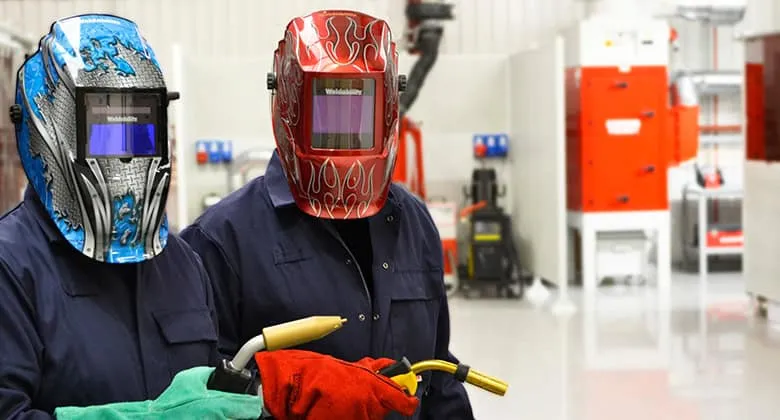
Welding safety means protecting welders from high temperatures, electric shock, intense ultraviolet (UV) and infrared radiation, welding fume and hot metal through suitable precautions. The essentials are a workplace risk assessment, effective fume extraction (local exhaust ventilation), the correct personal protective equipment (PPE) and compliance with UK health and safety legislation. Get those right and you protect both the immediate safety and the long-term health of everyone in the welding bay.
This hub is the pillar guide to the whole topic. Below you will find a plain-English overview of every major area, with links down to in-depth pages on welding hazards, fume control and extraction, PPE, fire and hot work safety, and the UK regulations that apply.
Why welding safety matters
Welding involves high temperatures, electrical hazards, intense UV radiation, fumes and hot metal. Without suitable precautions, these hazards can cause serious injury or long-term health problems. Following safe working practices, using the correct PPE and ensuring effective fume extraction helps protect welders and supports compliance with UK health and safety legislation.
The risks fall into two broad groups: immediate hazards that can injure on the spot (burns, electric shock, fire, flying sparks and arc eye) and long-term health hazards, chiefly the inhalation of welding fume. A good safety programme addresses both, and the rest of this guide is organised around them.
The main hazards of welding
The main hazards include welding fume, electric shock, burns, fire, UV and infrared radiation, flying sparks, hot metal, compressed gases and excessive noise. Employers should carry out a suitable risk assessment and implement appropriate control measures before welding begins.
Each of these deserves a closer look: what causes it, who it affects and how to control it. Our guide to welding hazards covers burns, arc eye, radiation, noise and electric shock in depth, including practical signs and symptoms to watch for.
Welding fume: the priority health risk
Welding fume is a mixture of very fine airborne metal particles and gases produced during welding. These particles are often invisible and can be inhaled deep into the lungs, where they can damage the lungs and affect long-term health. The composition depends on the parent material, the welding consumables and the welding process being used.
The UK Health and Safety Executive (HSE) advises that all welding fume should be considered hazardous to health, including fume from mild steel welding. Some fumes contain substances classified as carcinogenic (particularly when welding stainless steel and other alloys containing chromium or nickel), and the International Agency for Research on Cancer (IARC) has classified welding fumes as carcinogenic to humans.
Controlling fume is therefore the single most important part of any welding safety programme. The primary control is local exhaust ventilation (LEV), which captures fume at source before it reaches the welder’s breathing zone. Our welding fume control and extraction guide explains LEV, source capture, extraction arms, mobile units, downdraught benches, welding booths, and how to check whether your controls are actually working through personal exposure monitoring.
Fume is generated by every arc process. See the per-process guidance for MIG, TIG, MMA and laser welding within the fume control page.
Personal protective equipment (PPE)
Typical welding PPE includes a welding helmet, flame-resistant clothing, welding gloves, safety footwear and suitable eye protection. Depending on the risk assessment, respiratory protective equipment (RPE) may also be required.
PPE is the last line of defence, used alongside (never instead of) engineering controls such as LEV. Choosing the right helmet shade, the right gloves for MIG, TIG or MMA, and the right respiratory protection makes a real difference to both safety and comfort. Our welding PPE guide covers helmets, auto-darkening lenses, gloves, eye protection, RPE and powered air (PAPR) systems.
Fire safety and hot work
Welding generates sparks and molten metal that can ignite combustible materials. Keeping the work area clear, using suitable fire protection equipment and following hot work procedures where applicable are core safety controls. Where welding, cutting or grinding takes place in areas with fire hazards, a formal hot work permit helps ensure the right precautions are in place before work begins. See our fire safety and hot work guide.
Electrical and gas safety
Arc welding uses electrical current and, in many processes, compressed shielding gases, and both carry their own hazards. Electric shock and the safe handling and storage of gas cylinders are addressed through the risk assessment, correct equipment, training and safe working procedures. Specific guidance on cylinder handling and electric shock risk is covered within the welding hazards and PPE pages.
Regulations: COSHH, HSE and your legal duties
COSHH (the Control of Substances Hazardous to Health Regulations) requires employers to assess and control exposure to hazardous substances, including welding fume. UK employers have legal duties under health and safety legislation, including COSHH, to assess risks and protect employees during welding. That means providing suitable extraction, PPE, training and ongoing maintenance of control measures, and keeping proper records.
Our welding safety regulations and COSHH guide explains COSHH assessments, HSE guidance on fume, LEV testing intervals, who is responsible for welding safety, occupational hygiene and the records you should keep. For wider compliance topics see the welding standards and compliance hub.
How to improve welding safety in your workplace
Improving welding safety starts with identifying hazards and implementing effective controls. Suitable LEV, correctly selected PPE, regular equipment maintenance, employee training and exposure monitoring all contribute to a safer workplace. Reviewing safety procedures regularly helps maintain high standards and reduce long-term health risks. A practical order of priority is:
- Assess: carry out risk and COSHH assessments before welding begins.
- Control at source: install and maintain LEV to capture fume before it is inhaled.
- Protect the individual: provide and maintain correct PPE and RPE.
- Verify: use personal exposure monitoring and LEV testing to confirm controls work.
- Train and review: keep welders trained and review procedures regularly.